
Location guide
Buying Property in the Azores
A practical guide for international buyers considering property in the Azores, from São Miguel and Terceira to the smaller islands of the archipelago.
- Lower price levels
- Nature and outdoors
- Peace and quiet
- Current
Quick overview
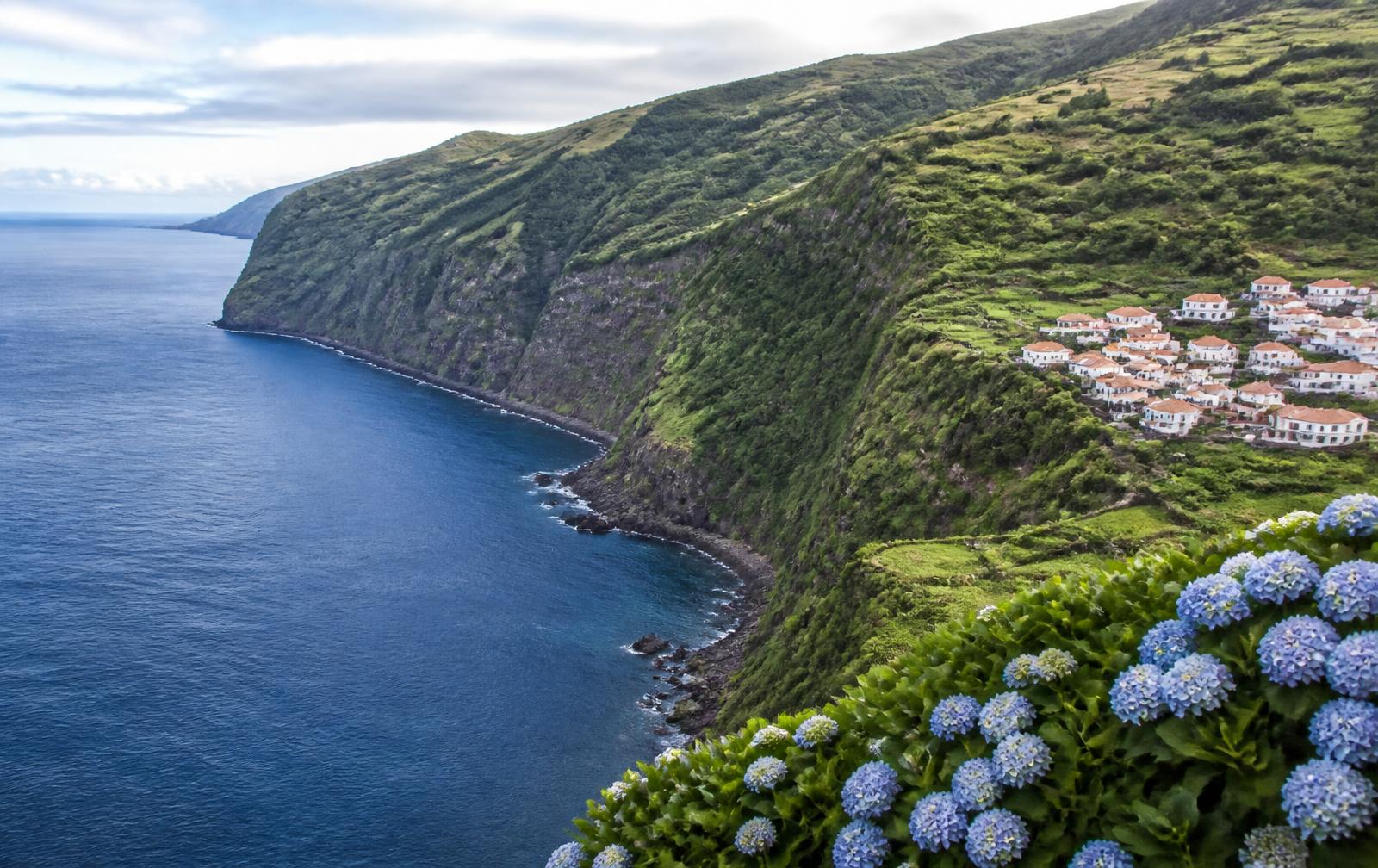
The Azores are an archipelago of nine islands, not one uniform property market. Property availability, access, services, development activity and everyday life differ materially between São Miguel and the smaller islands, and this guide treats them separately throughout.
- Airports
- Ponta Delgada (PDL) on São Miguel and Lajes (TER) on Terceira carry the main external connections; other islands rely on inter-island flights
- Character
- Atlantic islands: volcanic landscape, green interiors, small towns and low building density
- Property mix
- Houses, apartments, villas, rural property, land and renovation projects; availability varies sharply by island
- Getting around
- A car is normally needed outside central Ponta Delgada or Angra do Heroísmo
- Regional note
- The Azores are an autonomous region and apply their own regional IMT and IMI parameters
Quick comparison
A first, qualitative view of how the regions differ. Use the comparison tool for a version built around your own priorities.
- Airport accessAirport accessEvery island has an airport within easy reach, but the number of direct international routes is limited, so in most cases you will connect through Lisboa or Porto. That is why island regions are rated 4 rather than 5.
- HighAirport access: High
- Beach access
- MediumBeach access: Medium
- City life
- LowCity life: Low
- Year-round living
- MediumYear-round living: Medium
- Access to healthcarePortugal offers established public and private healthcare. This indicator compares regional access to major hospitals, specialist services and higher-complexity care, rather than the overall quality of healthcare.
- MediumAccess to healthcare: Medium
- Seasonality
- MediumSeasonality: Medium
- International community
- LowInternational community: Low
- New-build availability
- LowNew-build availability: Low
- Resort availability
- LowResort availability: Low
- Golf access
- LowGolf access: Low
- Surf conditions
- HighSurf conditions: High
- Family lifestyle
- MediumFamily lifestyle: Medium
- Culture and restaurants
- MediumCulture and restaurants: Medium
- Remote working
- HighRemote working: High
- Lower price levels
- Very HighLower price levels: Very High
- Nature and outdoors
- Very HighNature and outdoors: Very High
- International schools
- LowInternational schools: Low
- Rental demand
- LowRental demand: Low
- Peace and quiet
- Very HighPeace and quiet: Very High
- Public transport
- LowPublic transport: Low
- Non-car dependency
- Very LowNon-car dependency: Very Low
- SafetySafetySafety is rated at national level: Portugal ranks in the top tier of global peace and safety indices, so all regions are shown at the same 5-star level rather than being ranked against each other.
- Very HighSafety: Very High
Ratings are editorial indicators designed to help compare regions. They are not financial or investment rankings.
Who the Azores suit
The archipelago is a fit question rather than a ranking. It is not presented here as better or worse than mainland regions: it simply asks different things of a buyer.
Buyers seeking island living
An Atlantic setting with a strong island identity and a slower, community-based rhythm.
Buyers prioritising nature
Volcanic landscape, ocean, hiking and outdoor life are the everyday context rather than an occasional excursion.
Full-time buyers comfortable with a smaller market
Fewer properties come to market, and choice is narrower than in Lisbon, Porto or the Algarve.
Second-home buyers
Owners who travel a few times a year and can arrange maintenance and management while absent.
Remote workers
Feasible where connectivity, services and travel needs match the island chosen; São Miguel is the most straightforward.
Less suited to
Buyers who need frequent, flexible long-haul travel, extensive urban services, international schooling on the doorstep, or a large resale market.
Key islands
Each island offers a different buyer experience. The cards below focus on practical differences rather than sightseeing; individual island guides may follow in a later phase.
São Miguel
- Character
- The largest island, centred on Ponta Delgada, with the strongest concentration of urban services in the archipelago
- Typical buyer
- Full-time residents, remote workers and second-home buyers
- Seasonality
- Low
- Lifestyle
- Urban, coastal and rural environments within short distances; hospital, schools, shops and the widest restaurant offer
- Property mix
- Apartments, houses and villas, plus renovation property and land
Terceira
- Character
- Historic Angra do Heroísmo and the port town of Praia da Vitória, with an established local community
- Typical buyer
- Year-round residents and buyers wanting an urban-historic setting
- Seasonality
- Low
- Lifestyle
- Walkable historic centre, local services and a mix of coastal and rural surroundings
- Property mix
- Townhouses, rural houses, apartments and renovation property
Pico
- Character
- Lower-density island character shaped by the mountain, the vineyards and the coast
- Typical buyer
- Nature-focused buyers comfortable with fewer services
- Seasonality
- Medium
- Lifestyle
- Outdoor life, small villages, quiet winters; travel and practical services matter more here
- Property mix
- Houses, traditional stone property and land
Faial
- Character
- Horta and its marina give the island an Atlantic-crossing and sailing context
- Typical buyer
- Buyers wanting a small-scale urban environment with ocean focus
- Seasonality
- Medium
- Lifestyle
- Compact town, marina life, everyday services on a modest scale
- Property mix
- Houses and apartments, plus renovation property
São Jorge
- Character
- Rural and nature-focused, with fajãs along a long, narrow island
- Typical buyer
- Buyers seeking a quiet, low-density setting
- Seasonality
- Medium
- Lifestyle
- Farming and outdoor life, small communities; transport links and local services carry more practical weight
- Property mix
- Rural houses, land and renovation property
Santa Maria
- Character
- Smaller island with a drier, sunnier profile and a quieter pace
- Typical buyer
- Second-home buyers and buyers wanting a small community
- Seasonality
- Medium
- Lifestyle
- Beaches and coves, a limited but sufficient set of everyday services
- Property mix
- Houses and smaller-scale property; limited supply
Flores & Corvo
- Character
- The western group: very small markets in a strong nature and isolation context
- Typical buyer
- Buyers who actively want remoteness
- Seasonality
- High
- Lifestyle
- Dramatic landscape, very small communities; logistics, weather and services require planning
- Property mix
- Houses and land, with few properties available at any time
Houses, apartments, land and new build
Houses dominate outside the two main towns, with apartments concentrated in Ponta Delgada, Angra do Heroísmo and Horta. Renovation property and land are common. A property being marketed as land with 'building potential' establishes nothing: planning classification, licensing history and the registry position must be verified for the specific plot.
Buying a home
Houses, apartments, villas and rural property across the islands.
Read the guideOff-plan and new build
New-build activity is limited and uneven; availability varies materially by island.
Read the guideTourist and hospitality property
Tourist-registered units and their obligations, where a property is intended for visitor accommodation.
Read the guideLand and due diligence
Plots, rural land and renovation projects need licensing, registry and planning checks before any commitment.
Due diligence
Everyday life and year-round living
Daily life is organised around the ocean, the weather and the scale of the island you choose. São Miguel can offer a materially different year-round experience from Flores or São Jorge.
- Nature is the everyday setting: coastline, craters, hot springs, hiking trails and farmland rather than resort infrastructure.
- The climate is Atlantic and green: mild across the year, with frequent changes of weather and real ocean exposure on the coast.
- Urban services vary by island. Ponta Delgada concentrates hospital care, schooling, shopping and the widest cultural and restaurant offer; Angra do Heroísmo and Horta follow at a smaller scale.
- The restaurant, retail and cultural offer is smaller than Lisbon or Porto, and on the smaller islands it is limited and seasonal.
- Communities are small and local. Integration is usually easier for buyers who spend time on the island rather than visiting occasionally.
- Remote working is practical where connectivity and travel needs fit; check the specific property's connection rather than assuming an island-wide standard.
- Island logistics affect deliveries, renovation timelines, materials and trades availability, particularly outside São Miguel and Terceira.
Access and transport
Air connections are central to island living, and connectivity is not the same across the archipelago. Confirm current routes, timetables and operators for the specific island before you commit; they change by season.
- External flights
- São Miguel (PDL) has the widest external connectivity, with Terceira (TER) also carrying direct routes. Smaller islands are generally reached via one of these two.
- Inter-island travel
- Depending on the route and the time of year, travel between islands may mean a flight, a ferry, or a combination; the central group is better connected by sea in summer than in winter.
- Weather
- Atlantic conditions can disrupt flights and sailings. Build flexibility into travel plans, particularly for the smaller islands.
- Public transport
- Bus networks exist on the larger islands but frequencies are limited; they rarely support daily life outside the main towns.
- Car
- Assume a car is needed outside central Ponta Delgada or Angra do Heroísmo, and consider how it will be stored and maintained if the property is a second home.
- Healthcare and services
- Hospital care is concentrated on São Miguel, Terceira and Faial; smaller islands have health centres, with transfers for specialist treatment.
New development
New-build availability in the Azores is limited and uneven, and should not be assumed to resemble the pipelines in Lisbon, the Algarve or Madeira. Most new activity is small in scale and concentrated on the larger islands, with renovation of existing property far more common elsewhere. Where you do buy before completion, confirm the construction licence, the timetable, the payment schedule, the guarantees and the finished specification, and factor island logistics into delivery expectations.
Buying off-planTourist use
Some properties are registered for tourist accommodation rather than housing, and a few sit inside managed structures. Establish the registration, the condominium rules and the regional requirements before assuming a property can be let to visitors or used freely as a home.
Resort propertyPractical trade-offs
The Azores trade choice, scale and travel convenience for environment, space and a distinctive island life.
Strengths
- An exceptional natural environment across the whole archipelago
- Low-density living and limited overdevelopment
- A strong island identity and established local communities
- Direct ocean access and a mild, green Atlantic climate
- Real variety between islands, from urban São Miguel to remote Corvo
- Well suited to buyers looking for a quieter pace
Trade-offs
- Island travel logistics, including inter-island flights and ferries
- More limited services and healthcare on the smaller islands
- Smaller property markets with less choice and slower turnover
- Greater dependence on air and sea connections, which weather can disrupt
- Ocean exposure and weather affect maintenance and building condition
- Practical differences between islands are significant and easy to underestimate
- Resale can take longer in the smallest markets, which is worth planning for
The buying process here
The purchase process is national, not regional: reservation, promissory contract (CPCV), due diligence and the deed follow the same sequence everywhere in Portugal. What changes locally is the property type, the documentation and the questions worth asking before you commit.
See how to buyCosts and taxes
The Azores are an autonomous region and apply their own regional IMT and IMI parameters, which differ from the mainland tables. The calculator includes the autonomous-region option; confirm the regional position for the specific property before budgeting.
If you are buying from abroad
A NIF, a Portuguese bank account or a payment route, and clear representation arrangements matter more than the region you choose. The country guides set out what changes depending on where you live.
Buyer GuidesCompare this region
See this region next to one or two others, weighted by the things that matter to you.
Considering island living? Compare Madeira and the Azores
Frequently asked questions
Frequently asked questions
No. The archipelago has nine islands and they behave very differently. São Miguel has the largest market and the widest services; Flores, Corvo and São Jorge have very small markets where availability, access and logistics matter a great deal.
São Miguel is usually the most straightforward for year-round living, followed by Terceira and Faial, because of hospital access, schooling, shopping and external flights. Smaller islands can work well but ask more planning of a full-time resident.
Depending on the route and the season, by air or by sea. Inter-island flights connect the archipelago year-round, while ferry services vary by group and time of year. Check current routes and timetables rather than assuming a fixed pattern.
Outside central Ponta Delgada and Angra do Heroísmo, almost certainly. Bus networks exist on the larger islands but frequencies are limited.
Sometimes, but marketing language about building potential establishes nothing. Planning classification, licensing history and the registry position must be verified for the specific plot before you commit.
The Azores are an autonomous region with their own IMT and IMI parameters, which can differ from the mainland. Confirm the regional rules for the specific property before budgeting.
They are both islands, but they are not interchangeable: climate, terrain, market size, services and connectivity differ. Comparing them side by side against your own priorities is the practical way to decide.
Before you commit to a specific property
Once you have identified a property, the focus shifts from choosing a location to checking that particular transaction: title, licensing, charges, condominium documents and contract terms.
Legal services are provided by Valente Veiga & Associados.
How this guide is maintained
This guide uses stable, qualitative information about each area: geography, transport, property mix, services and lifestyle. It does not publish asking prices, transaction prices or rental yields.
Ratings are editorial indicators designed to help compare regions. They are not financial or investment rankings.
Content reviewed on 14 August 2026. Data version 2026.1.
Current
Related guides
How to buy property in Portugal
The full purchase process, from first offer to deed and registration.
Costs and taxes
IMT, Stamp Duty, notary, registration and the recurring costs of ownership.
Purchase Cost Calculator
Estimate the taxes and fees on a specific purchase price.
Buyer Guides
Country-specific guidance for buyers based outside Portugal.
This guide is general information about Portuguese regions and the property buying process. It is not legal, tax or investment advice, and it does not describe any specific property.
Ratings are editorial indicators designed to help compare regions. They are not financial or investment rankings.